

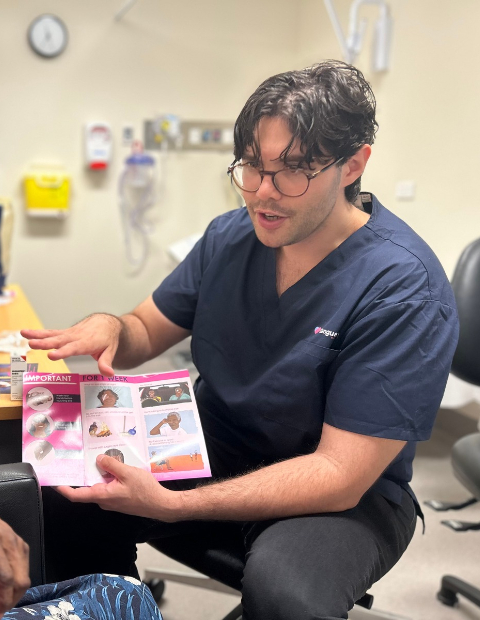
Through the IRIS Student Mentoring Program, Vanguard Health, in partnership with The Fred Hollows Foundation, is helping create these opportunities by connecting First Nations medical students and junior doctors with experienced ophthalmology teams working in rural and remote communities.
In November 2026, the program welcomed Aboriginal junior doctor Dr Brodie Seymour to Katherine, Northern Territory, for an intensive week of ophthalmology training and clinical mentoring. Working alongside a multidisciplinary team delivering cataract surgery and patient care, Brodie gained valuable exposure to the full ophthalmology care pathway while experiencing first-hand how specialist outreach services support communities outside metropolitan centres.
The week provided an opportunity to develop clinical knowledge, build professional connections and strengthen Brodie's existing passion for rural and remote health.
Bringing Ophthalmology Experience to the Next Generation
The Student Mentoring Program was established to provide structured, funded clinical immersion opportunities for First Nations medical students and junior doctors.
By offering hands-on exposure, mentorship and career guidance, the program aims to support more First Nations clinicians to explore ophthalmology and contribute to eye health services in their communities.
Brodie is an intern at Princess Alexandra Hospital in Brisbane. Following conversations at the First Nations Eye Health Alliance Conference in May 2026, he expressed interest in participating in the program and connected with the Vanguard Health team to arrange the placement.
The November intensive provided an opportunity to step outside his usual hospital environment and experience specialist ophthalmology services operating in a regional setting.
A Week of Hands-On Clinical Learning in Katherine
Brodie joined Vanguard’s multidisciplinary ophthalmology team delivering a surgical intensive at Katherine Hospital.
The team included an ophthalmologist, registrar, two scrub/scout nurses, an orthoptist, an optometrist and a program manager. Working alongside these experienced clinicians gave Brodie an opportunity to understand how each professional contributes to the delivery of coordinated eyecare.
Across the week, Brodie participated in several stages of the patient care journey, from initial assessments through to surgery and post-operative reviews.
Pre-operative assessments
Brodie attended patient consultations alongside ophthalmologist Dr Nishantha Wijesinghe, registrar Dr Alessandro Costa, orthoptist, nursing team and staff from Katherine Hospital.
He observed and participated in assessments, interacted with patients and had opportunities to ask questions and develop his understanding of ophthalmic examinations. This included examining patients using a slit lamp under clinical guidance.
Cataract surgery and theatre experience
Brodie spent time in theatre observing cataract procedures and learning about the surgical and anaesthetic processes involved.
He gained exposure to the preparation, anaesthetic procedures, surgery and recovery process. He also had the opportunity to scrub in and assist the team during a procedure, helping hold the head of a patient with dementia to minimise movement and support the safe completion of surgery.
This experience provided valuable insight into the teamwork, communication and clinical coordination required in ophthalmic surgery.
Post-operative care and patient education
An important part of Brodie's experience involved supporting patients following surgery.
He attended post-operative reviews and was then provided with the opportunity to undertake his own consultations, under supervision, providing patients with education about their post-operative care
Using the post-operative cataract surgery brochure as a guide, Brodie explained home-care requirements, demonstrated how to administer eye drops and discussed any concerns patients had following their procedures.
These conversations gave him an opportunity to build rapport with patients and develop his understanding of the importance of clear, culturally safe communication throughout the recovery process.
The Importance of Culturally Safe, Local Healthcare
One of the most valuable aspects of the placement was Brodie's opportunity to engage directly with patients, their families and carers.
Through these interactions, he gained a deeper understanding of the considerations involved in providing culturally safe care in rural and remote communities.
Reflecting on his experience, Brodie highlighted the importance of recognising the diversity of languages spoken across communities, even within relatively small geographical areas. He also identified the value of translators and family members in supporting effective communication and culturally safe care.
Strengthening Future Pathways in Rural and Remote Health
The program offered more than an introduction to ophthalmology. It provided an opportunity for Brodie to explore the broader role of specialist outreach services in improving access to healthcare across rural and remote Australia.
His experience highlighted how visiting specialist teams can work alongside local health services to deliver coordinated care, while also creating valuable learning opportunities for emerging clinicians.
Brodie was already interested in rural and remote health before participating in the program. However, the intensive further reinforced this passion and his desire to contribute to these communities.
As he reflected in his feedback:
“This has reinforced my passion for rural and remote health; I want to do more for these communities.”
He also spoke positively about the opportunity to gain ophthalmology experience, noting that junior doctors often have limited exposure to the specialty early in their careers.
His recommendation to other First Nations medical students and junior doctors was clear:
“The intensive was an amazing experience. Junior doctors get very little ophthalmology experience, so to be able to get that experience in such a rewarding setting was absolutely amazing. I recommend all mob in medschool or early in their career give it a go!”
Looking Ahead
The November 2026 intensive demonstrates the value of creating meaningful opportunities for First Nations medical students and junior doctors to gain practical experience, connect with mentors and explore future career pathways in eye health.
By combining clinical exposure with professional guidance and direct involvement in rural and remote healthcare delivery, the program supports the development of a stronger and more representative First Nations eye health workforce.
Vanguard Health and IRIS are grateful to The Fred Hollows Foundation and its generous donor for making this opportunity possible.
We look forward to building on the success of this round and continuing to support future mentoring opportunities that contribute to First Nations leadership, clinical development and improved eye health outcomes for communities across Australia.
Together, we are helping build a future where more First Nations clinicians can shape and strengthen eye health care for their communities.