

.png)
In rural and remote areas, a lack of equitable access to public cataract surgery has resulted in waiting periods up to three times longer than in major cities, with Indigenous Australians also waiting more than 50% longer for sight-saving cataract surgery.
The Indigenous and Remote Eye Health Service (IRIS) delivers eye care and eye surgery directly to communities in remote and rural Australia to help address preventable vision loss caused by cataracts — providing local access to world-class eye health services for Indigenous Australians.
We work closely and collaborate with local hospitals and health services, as well as Aboriginal Community Controlled Health Organisations (ACCHOs) within these communities to provide a seamless and culturally safe experience for patients.
IRIS ensures that patients can receive care and eye surgery closer to home, in their community or on country where possible, and in a timely way. This reduces the impact on the local community and greatly improves the overall patient experience while concurrently helping to address hospital waitlists for cataract surgery.
Thousands of Australia’s First Nations peoples have been assisted through the IRIS Program since it was launched in 2010.

Gapuwiyak
Jeffrey said that it was like he had "brand new eyes" after his sequential, bilateral cataract operations. He works at the community store in Gapuwiyak and said it will make a world of difference for him going back to work.
Angurugu (Groote Eylandt)
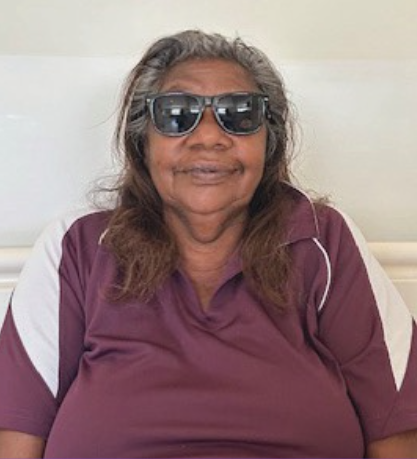
Gwen from Angurugu (Groote Eylandt) was ecstatic to have ‘new vision’. She says it will be a huge help with her work and driving as well as being able to go ‘sugar bagging’ for bush tucker.
Galiwinku
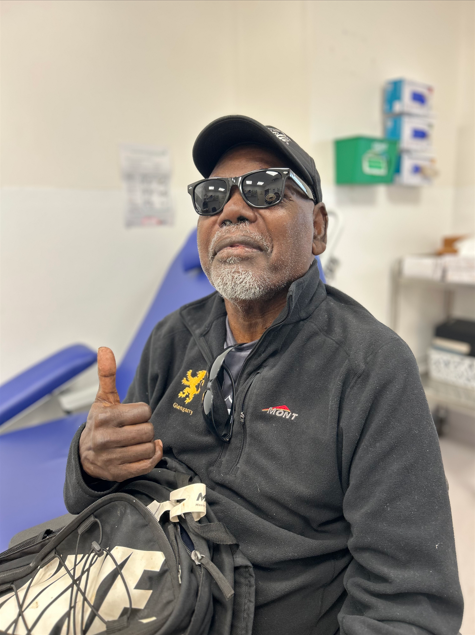
Bruce from Galiwinku used to drive for his local health clinic picking patients up to be seen. But as his vision deteriorated due to cataracts, he no longer could. During his pre-op consultation he could only see 6/60 in one eye and light perception in the other, which is legally blind. Bruce had an incredible outcome after his sequential, bilateral cataract surgeries with visions of 6/12 and 6/18 only 1 day after surgery which is legal to drive. He is looking forward to getting back to fishing, hunting and driving.
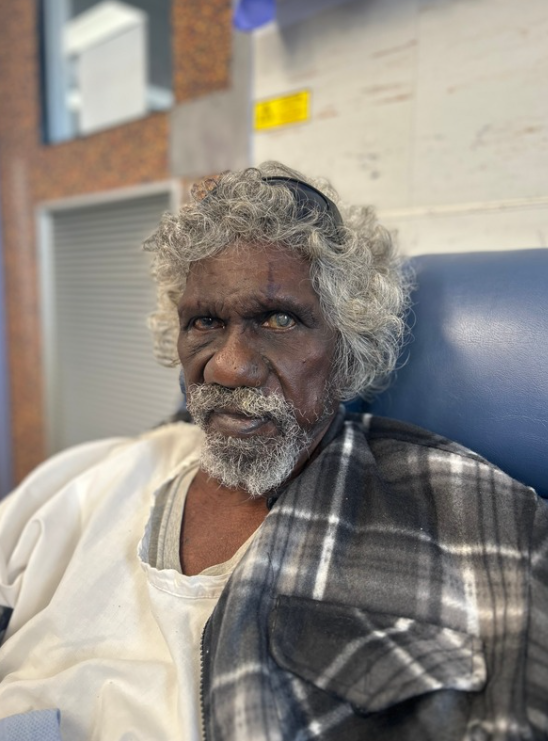
Katherine
Nelson from Katherine was so pleased with his vision when getting his patch taken off the day after surgery. He planned to come back during the next IRIS visit to have his other eye operated on.
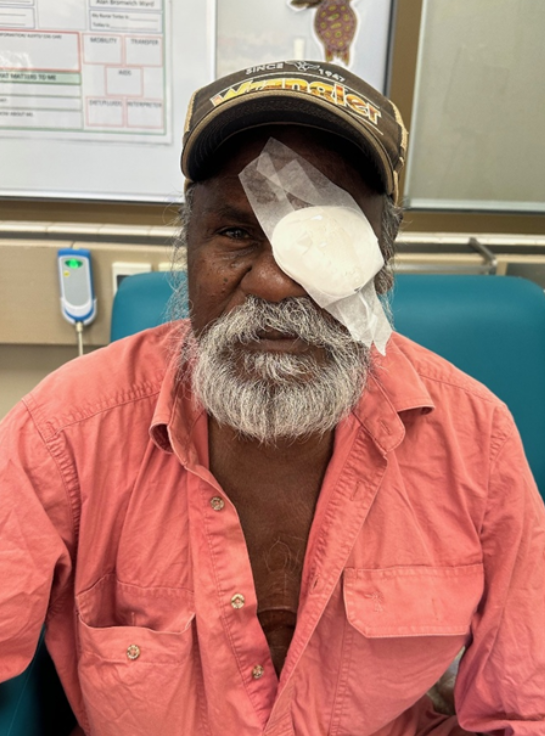
Borroloola
Thelma – ‘a strong woman’ from Borroloola, Northern Territory who was most excited to be able to fish and garden again back in 2023 when she had her first eye operated on. These are her favourite activities which she had not been able to do due to loss of eyesight.
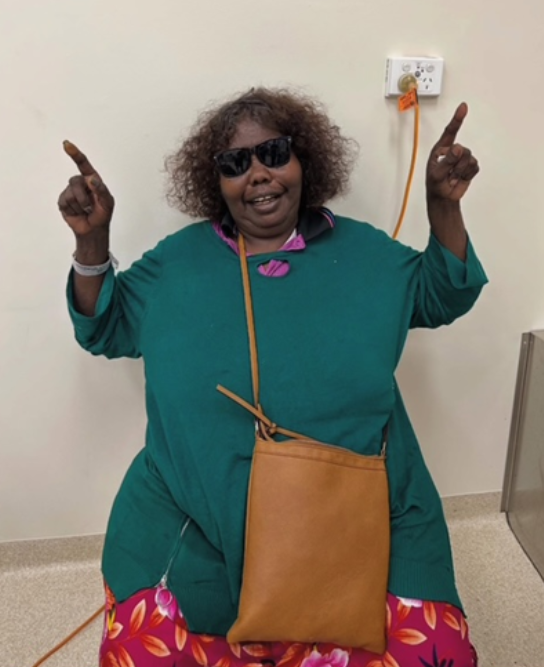
Ngukurr
Gwen from Ngukurr is known to the program as we operated on both of her husband’s eyes on previous IRIS trips in 2023. Gwen was exceptionally pleased to see familiar faces within the team and was happy to have the surgery given the trust that had been established when she supported her husband’s surgery. Gwen can now see well again and was laughing that she would not recognise Barry anymore as he had looked blurry for so long.
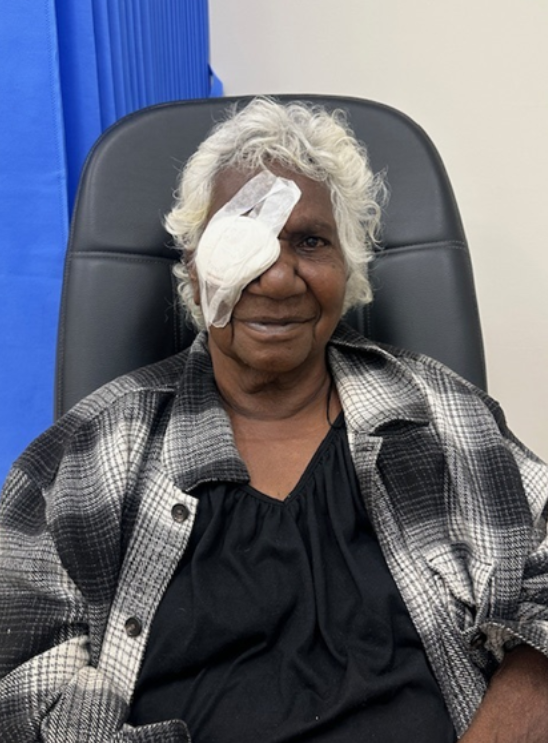
Minyerri
Pictured is super happy Estelle, who was very motivated to come to Katherine for the surgery. She travelled from Minyerri by herself after the local clinic was unable to organise transport for her. She was ecstatic after getting her patch taken off and some new sunglasses.
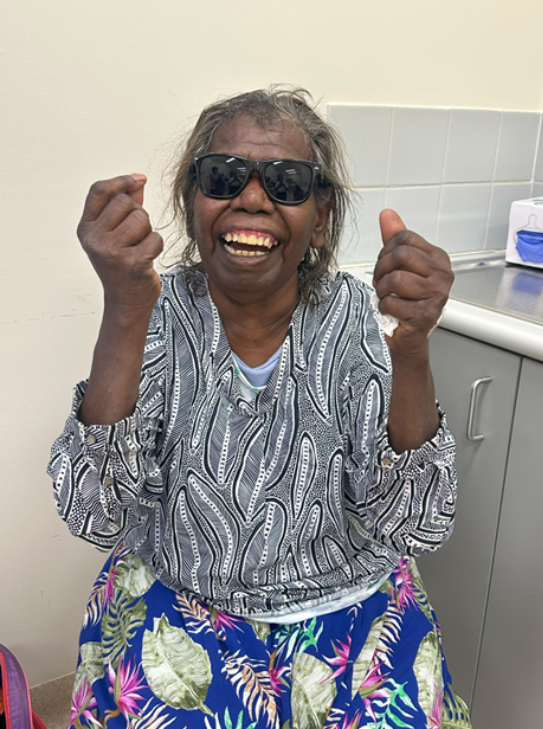
Galawinku (Elcho Island)
George works for the Menzies School of Research and Melbourne University Hepatitis B Program. George needs good vision to do his work. He noticed that is was becoming harder for him to drive and work. Before his surgery, he could only see hand movements. George was very happy with the result of is surgery and is looking forward to being able to do the things he loves again, such as reading.
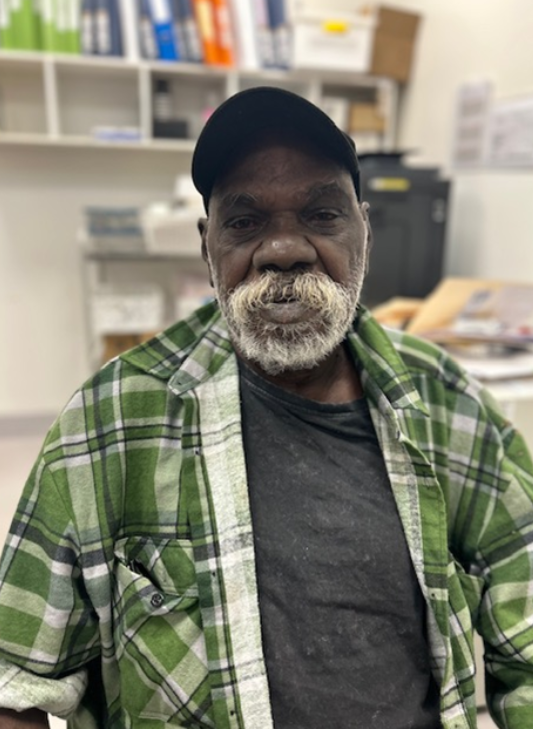
Lajamanu
Theresa is a Aboriginal Liaison Officer and Health Worker at Lajamanu clinic. Her pre op vision was 6/18 6/12. Her post op vision is 6/9 6/5. “I can see clear now” she said. She was born in the Kimberly Region of WA. She is from the saltwater people. She met her husband over 50 years ago. He was a man from the desert. She moved to Lajamanu with her husband when they got married and she has lived there ever since.
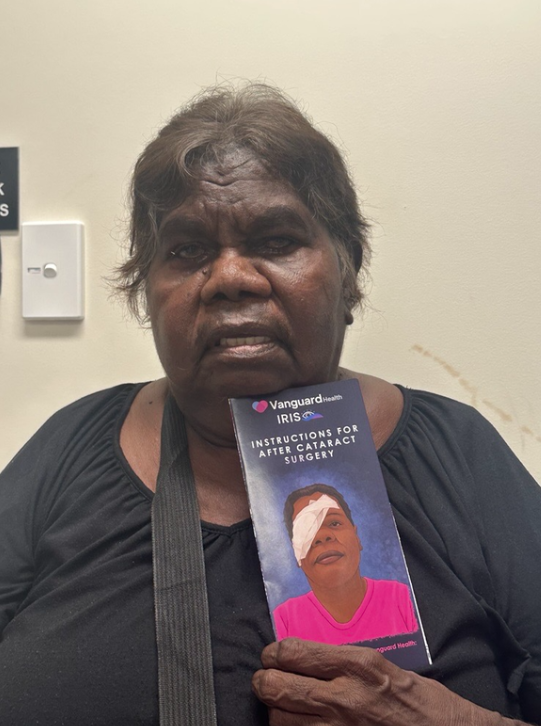

Download instructions to help with your surgery aftercare or read the article discussing the IRIS' ‘Instructions for After Cataract Surgery’ Pamphlet.
.jpg)
For many First Nations People living outside major cities,accessing
specialist eye surgery often means travelling hundreds of kilometres,
spending nights away from home and relying on family or carers to assist.
IRIS was developed to change that.
Rather than expecting those in need to travel, Vanguard Health brings specialist ophthalmology services directly into regional and rural communities, allowing more Australians to receive sight-restoring surgery closer to home.
First Nations Australians living in regional Australia deserve the same access to timely specialist care as anyone else living in a metropolitan area.
The IRIS program is designed around one simple principle: Deliver specialist healthcare closer to where indigenous Australians live.
By reducing travel, improving access and strengthening local health services, IRIS helps build healthier communities while improving quality of life for patients and families.
.jpg)
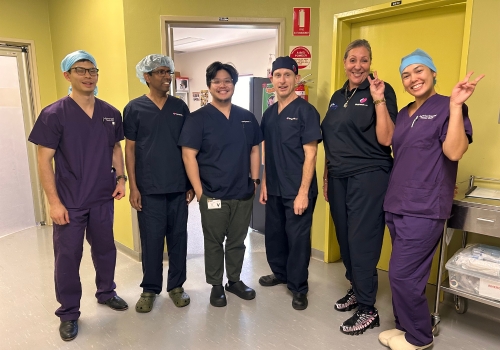
Successful healthcare programs require more than good intentions.They require collaboration.
IRIS has earned strong support from ophthalmologists,anaesthetists, nurses and health service leaders because it delivers an efficient, reliable and patient-focused model of care.
Our clinicians focus on delivering exceptional patient care and support health services to achieve significant measurable outcomes.
IRIS combines the efficiency of private specialist services with the accessibility of public healthcare.
Working within existing public hospital facilities, Vanguard Health delivers ophthalmology services through an integrated model that increases surgical capacity without requiring new infrastructure.
This innovative approach allows health services to make better use of existing operating theatres, equipment and clinical resources while reducing pressure on hospital waiting lists.
.jpg)

For more than a decade, Vanguard Health has successfully partnered with governments and healthcare providers to deliver specialist services where they are needed most.
Our reputation has been built on trust, consistency and the ability to establish long-term programs that create lasting value for patients and health services alike.
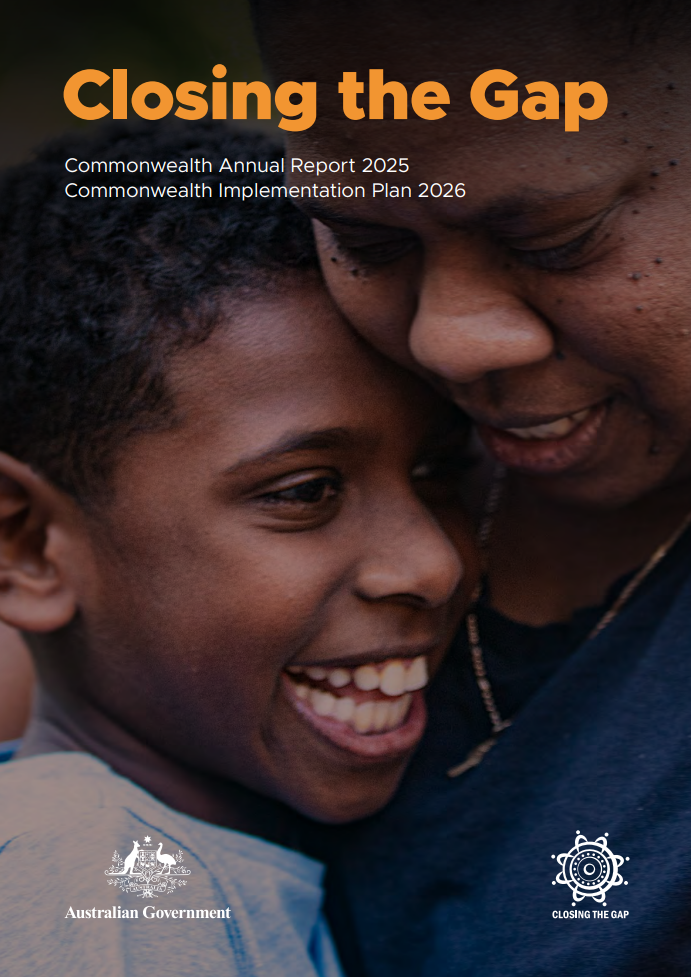
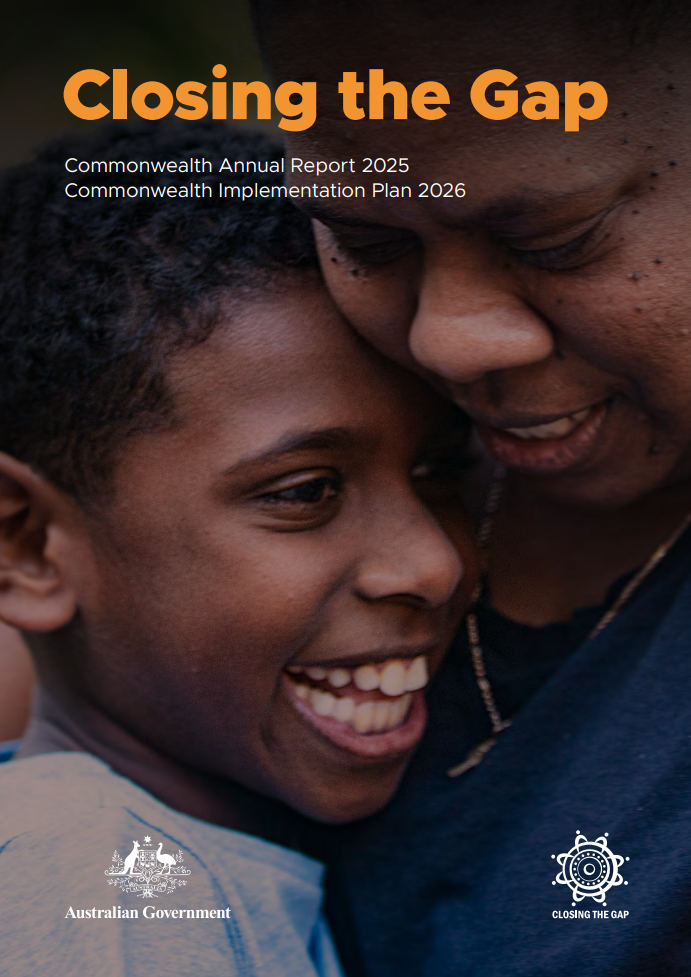
The Indigenous and Remote Eye Health Service (IRIS) has been positively highlighted in the latest Commonwealth Closing the Gap annual report for its contribution to improving eye health outcomes in rural, remote and Indigenous communities.
In 2025, IRIS completed 445 eye surgeries, delivering life changing specialist care closer to home and helping reduce preventable vision loss across Australia. Through culturally safe service delivery and strong community partnerships, IRIS continues to support improved access, outcomes and health equity.
Find the full report and our work to support accessible healthcare outcomes below


The IRIS Program provides sight-saving cataract surgeries to Indigenous, remote, and rural Australians.
Success is measured by the number of patients we can treat and ensure their vision is restored through surgical intervention. We also measure our success based on the number of post-operative smiles.
The IRIS team have considerable experience delivering health services in regional, rural and remote Australia.
We focus on addressing local constraints for the delivery of eye health services and ensuring patient care is the core focus.
This enables funding to be applied flexibly to maximise patient outcomes and experiences.
All clinical experts engaged in the IRIS Program hail from across the country and are recognised in their fields as genuine experts and masters of their craft.
This ensures that patients in rural and remote locations will receive the same world-class level of care as patients in Australia’s metropolitan cities.
We aim to provide care as close to home as possible and directly in the communities where the patients live.
We understand the challenges of leaving the community to receive care, and we aim to ensure that patients travel as little as possible to receive care.
Reducing the disruption of communities to greatly improve patient and carer experiences.
Bringing specialist teams into these communities also provides a source of revenue for the local economy via the businesses we support during our stay.

If you are a clinician involved in the delivery of eye health in Australia and believe you could contribute to remote and rural communities through IRIS, we want to hear from you.
We welcome the opportunity to speak with clinicians to investigate the ways you can get involved with IRIS or other aspects of the clinical services delivered by Vanguard Health.

If you believe your community has an existing eye health service deficit and would like to be considered by the IRIS Clinical Governance Committee for future schedules, we want to hear from you.
We are interested to hear from community leaders, community members, and clinicians working in remote and rural communities who believe that an IRIS visit would be beneficial to their community.
We will then investigate the need in your local area and assess it as part of the national planning process for future IRIS service locations.

If you believe in the IRIS story and want to help rural and remote communities with improved access to eye health services, we want to hear from you.
We are always looking for Partners who:
We believe in better health for remote communities and look forward to your support to extend our reach and delivery to more Australians.

The IRIS Program is delivered as a grant from the Australian Government, and we gratefully acknowledge their support for this critical health program in Indigenous, rural, and remote communities across Australia.
The Program is complementary to existing support services that aim to improve Indigenous eye health across Australia.

Vanguard is committed to engaging with Australian private specialists and health services to enable the efficient extension of their services to public patients Indigenous, rural and remote locations.
In partnership with clinicians and public health services, Vanguard Health has coordinated specialist health programs for both federal and state governments across Queensland, Western Australia, New South Wales, South Australia, and the Northern Territory.
.png)
The Fred Hollows Foundation is a global eye health charity working to end avoidable blindness and improve access to eye care. In Australia, the Foundation has partnered with IRIS to support access for First Nations Australians to cataract surgeries. The foundation has a focus on cataract treatment and assists the IRIS program by improving access to quality eye health care and reducing barriers to sight-saving services for First Nations communities.

The Australian Society of Ophthalmologists was formed in 1984 to represent the medico-political interests of ophthalmologists across the country.
Today, the ASO has grown to become the peak medico-political body for ophthalmologists and their patients.
The ASO is committed to advocating for access to safe, affordable, and quality eye health services for all Australians.
When ophthalmologists and business associates join the ASO, they become part of a growing community of specialists united by a common goal to safeguard ophthalmology practise in Australia — the battles fought today, protect the future of tomorrow.

MDA National is a doctor-owned medical indemnity insurer that exists only to support and protect our Members and promote good medical practice. MDA have partnered with the Vanguard Health IRIS program and provided sponsorship to support the program ongoing.
.png)
The Northern Territory Department of Health (Health NT) manages public health services across the Territory, including regional and remote clinics, hospitals, and community health programs. Through its system of culturally responsive care and partnerships with outreach initiatives, NT Health facilitates local delivery of specialist services such as eye health. Its collaboration with IRIS helps bring public health infrastructure and clinical support to remote cataract surgery clinics and pre/post-operative care in Territory communities.
.png)
The National Aboriginal Community Controlled Health Organisation (NACCHO) is the peak national body representing Aboriginal Community Controlled Health Organisations (ACCHOs) across Australia. It champions community-led, culturally informed primary health care for Aboriginal and Torres Strait Islander peoples, including eye and vision health initiatives. Our IRIS team work alongside ACCHO’s across the Northern Territory to ensure culturally safe care, access to the service and ensure patients understand their procedure and the reason for visiting the team.
Content Warning
Aboriginal and Torres Strait Islander peoples are advised that this website may contain images, voices, or names of individuals who have passed away. We acknowledge and respect the cultural protocols of First Nations peoples. All images on this video that include First Nations people or Elders have been used with the permission of the individuals.